
About Us
Founded in 1926, the Business Technology Association (BTA) serves office technology dealerships, resellers, manufacturers, distributors and service companies. Its core members — office technology dealerships — consult, provide services and sell hardware, software and supplies with the primary goal of helping businesses optimize business document and information workflows. Through the association's various educational programs, information, research, legal services, publications and guidance, BTA member dealerships are positioned to be the premier source of the office technology used by businesses throughout the United States every day.
BYLAWS OF THE BUSINESS TECHNOLOGY ASSOCIATION
Sept. 1, 2026
ARTICLE I: NAME
Section 1. This Association shall be known as the BUSINESS TECHNOLOGY ASSOCIATION (“BTA”).
Section 2. This Association is incorporated in the State of Illinois as a not-for-profit 501c6 corporation.
Section 3. This Association shall not be conducted for the financial profit of its members but shall be conducted for the mutual benefit of its entire membership.
ARTICLE II: MEMBERSHIP
Section 1. MEMBERSHIP CLASSIFICATION. Memberships in this Association shall be divided into the following classifications and shall be under the jurisdiction of the Board of Directors. The Board of Directors shall rule on any questions that may arise concerning benefits, privileges of membership, classification of membership, and dues and assessments of membership:
A. ACTIVE. Any person, firm, or corporation engaged primarily in the business equipment and systems industry is eligible to become an ACTIVE member of the Association.
B. ACTIVE VOTING. Each ACTIVE member firm or corporation whose revenues are in excess of fifty (50%) percent from sales of third party products and services to end-users shall be entitled to one vote on all matters submitted to the voting membership.
C. CONTINUING MEMBERSHIP. Continuing members are those members who are no longer participating in the sale or service of business equipment and systems, and do not qualify for any other classification of membership. They shall have been ACTIVE VOTING members or employees of ACTIVE VOTING member firms in good standing. They shall be entitled to those benefits established by the Board of Directors.
Section 2. MEMBERSHIP DUES. The Board of Directors may by majority vote establish dues and assessments for membership in this Association. All dues and assessments shall be payable to the Association in United States funds with the initial application of membership and on each anniversary date of membership.
Section 3. REMOVAL. A Member of this Association may be removed by the affirmative vote of five (5) members of the Board of Directors when that Member, following due process, has been found to have violated these Bylaws or fails to conduct itself in a manner that reflects favorably upon the Association and/or industry.
Section 4. SPECIAL INTEREST GROUP. Upon written petition to the Board of Directors from fifty (50) ACTIVE VOTING members of the Association, the formation of a Special Interest Group shall be considered by the Board of Directors.
Section 5. SUBSCRIPTION. Each member shall agree to be bound by these Bylaws and all amendments thereof before being admitted to membership.
Section 6. WAIVER OF DUES. The dues of any member found in distress may be waived temporarily by the Board of Directors.
ARTICLE III: MEETINGS OF MEMBERS AND QUORUM REQUIREMENTS
Section 1. ANNUAL MEETINGS. An Annual Meeting of this Association shall be held. Written notice of the time, place, and agenda of the Annual Meeting shall be mailed and/or transmitted to all members of the Association not less than fifteen (15) days before the date of such meeting. Any meeting of the Members may be conducted by telephonic or electronic means provided all persons participating in the meeting can communicate with each other in real or close to real time.
Section 2. QUORUM. One (1%) percent, but in no event fewer than twenty-five (25) ACTIVE VOTING members in good standing, shall constitute a quorum. Proxy voting is not permitted.
Section 3. Association may conduct additional regional meetings, format and number to be determined by board, and defined in policy.
ARTICLE IV: BOARD OF DIRECTORS
Section 1. AUTHORITY & REPRESENTATION. The properties and business of this Association shall be managed by its Board of Directors
Section 2. COMPOSITION. The Board of Directors shall be comprised of twelve (12) members, including the Immediate Past President, three (3) Officers, and eight (8) Directors-at-large. The President shall serve as Board Chairperson.
Section 3. ELIGIBILITY CRITERIA, TERMS & MEETINGS
A. Eight Directors-at-large, 2 from each region in effect as of 8/26, or as otherwise defined in policy, from candidates put forward by Nominating Committee (Article VI.1) based on criteria set forth by the Nominating Committee and approved by the Board.
B. Directors must be ACTIVE VOTING members of the Association.
C. All Directors-at-large shall serve a (2) year term and may not exceed three (3) consecutive terms, excluding any full years spent filling unexpired term of a vacancy.
D. OFFICERS. The Officers of this Association shall be the President, President-Elect, and Secretary/Treasurer all of whom shall be ACTIVE VOTING members and shall each have 1-year terms. Candidates for president elect may be the secretary treasurer or may be nominated from the directors-at-large The Secretary-Treasurer may serve for up to two terms.
Section 4. OFFICER DUTIES
A. President. The President shall perform all duties set forth in these bylaws such duties as may be prescribed by the Board, and all other duties customary of the office of the President. The President shall preside at all meetings of the Members and the Board: have authority to sign documents on behalf of the organizations, represent and be official spokesperson, have authority to appoint committee members and fill committee vacancies as set forth in these bylaws, have authority to attend or to authorize a designee to attend all meetings of the Association. The President shall succeed to the office of Immediate Past President upon completion of their term. In the event of the President’s death, incapacity (or in the sole judgement of the Board), resignation, or removal, the President Elect shall assume the office of President for the remainder of the President’s term and continue as President for their previously scheduled terms.
B. President Elect. The President Elect shall perform all duties set forth in these bylaws and such other duties as prescribed by the Board. The President Elect shall preside at all meetings of the Members and of the Board in the absence or unavailability, or at the direction of the President. The President Elect shall succeed to the office of President upon completion of their term.
C. Secretary/Treasurer. The Secretary/Treasurer shall perform all duties set forth in these bylaws, such duties as prescribed by the Board, and all other duties customary to the office of the Secretary, including, without limitation: keeping or causing to be kept the minutes of all meetings of the Members and of the Board; ensuring that all required notices are properly given; acting as the custodian of the corporate records; attesting to the validity and accuracy of corporate documents and records; serving as Chair of the Finance Committee and providing Board oversight to budget development and financial reporting
Section 5. VACANCY. Any vacancy in the Board of Directors shall be filled by a majority of the Board within sixty (60) days. A Director so appointed shall serve until the next general election provided s/he meets all requirements of eligibility. Any Director absent from two (2) face-to-face meetings in succession without the consent of the Board shall be automatically terminated from the Board. The member may request reinstatement within two (2) months of termination and the Board may reinstate the individual, though this provision may not be used for any member more than once per three (3) year term.
Section 6. MEETINGS. There shall be no less than two (2) meetings per year of the Board of Directors which may be held at any place or manner designated by the President.
Section 7. QUORUM. Fifty-one (51%) percent of the members of the Board of Directors in good standing shall constitute a quorum.
Section 8. COMPENSATION. Directors and Volunteers in this Association shall receive no compensation other than approved expenses incurred in conjunction with their activities on behalf of this Association.
Section 9. INDEMNIFICATION. This Association shall provide indemnification to the full extent permitted by Illinois law, it being the policy of this Association to safeguard its Volunteers, Directors, Officers, Management, and Employees from expense and liability for actions taken in good faith in furtherance of the interests of the Association and its members.
Section 10. CONFLICT OF INTEREST. Each Director-at-large, Officer, and any other person acting on behalf of the Association shall act in the best interests of the Association and shall avoid any actual, potential, or perceived conflict of interest. Each such person shall complete and submit an annual written disclosure statement identifying any financial, personal, business, professional, or organizational interests or relationships that could reasonably be expected to influence, or appear to influence, the person’s judgment or actions on behalf of the Association. The Board shall review disclosed conflicts and determine appropriate management steps, which may include recusal, abstention, modification of the transaction or relationship, additional oversight, or other measures deemed necessary to protect the interests of the Association. All disclosures, determinations, recusals, abstentions, and management actions shall be documented in the minutes or other appropriate records of the Association. The Board may adopt and maintain a Conflict-of-Interest Policy and related procedures consistent with this Section.
ARTICLE V: COMMITTEES AND TASK FORCES
Section 1. STANDING COMMITTEES OF THE BOARD INCLUDE:
A. Executive Committee comprised of President, President Elect, Secretary-Treasurer and Immediate Past President who operate and make decisions on behalf of the Board in between board meetings. They shall serve for a term of 1 year per their designated officer terms.
B. Finance Committee - The Finance Committee is responsible for general oversight of the organization’s finances, investments, financial systems, audits, budget, and such other matters relating to the finances and investments of the organization and shall perform such other duties as set forth in the committee’s charter or as assigned by the Board. The Finance Committee is comprised of the President, President Elect, Secretary/Treasurer and 1-2 Directors-at-large and the Executive Director who shall serve as non-voting member. The President shall appoint the Directors-at-large who shall serve for a term of 1 year and be eligible for reappointment.
C. The Nominating Committee shall receive and evaluate nominations for officers and Directors-at-large per procedures set forth in the committee’s charter and approved by the Board. The Nominating Committee shall be composed of the Immediate Past President, the President, and between 2-3 Directors-at-large appointed by the President who shall serve for a term of 1 year and be eligible for reappointment. The Immediate Past President shall serve as Chair of the committee.
Section 2. OTHER COMMITTEES. The Board of Directors, or the President with Board approval, may appoint Chairpersons and members to Committees and Task Forces as necessary to support BTA’s purposes. The action establishing other committees shall set forth the committee’s purpose, authority and required qualifications for membership on the committee and shall be subject to the approval of the Board of Directors. A Committee or Task Force shall continue until its assignment is complete or the Board of Directors decides the Committee or Task Force is no longer required.
Section 3. EX-OFFICIO MEMBER. The National President shall be an ex-officio member of all Committees and Task Forces.
ARTICLE VI: BOARD MEMBER ELECTION
Section 1. Board Directors-at-large and officers are elected by eligible voting members from among candidates put forward by the Nominating Committee (ARTICLE V.1).
Section 2. BOARD MEMBER ELECTION. All elections shall be by ballot, communicated to the ACTIVE VOTING membership no less than thirty (30) days prior to the end of the Association’s Fiscal Year in June Such ballots shall contain thereon, the names of the qualified candidates nominated to run for the position, as determined by the Nominating Committee (Article V.1). Persons who do not appear on the official slate of candidates may be placed on the ballot provided they qualify. Ballots shall be returned prior to the last week of June. The Association’s Executive Director shall have the ballots tabulated no later than the end of the Fiscal Year and certify, in writing, the results to the Board of Directors. The qualified person receiving the most votes for the respective office is elected. Each Officer shall serve for his/her term, from July 1 to June 30. The President-Elect shall become President each July 1.
Section 3. PROXIES. Proxies are not permitted nor authorized in meetings of the Board of Directors or the General Membership of this Association.
Section 4. REMOVAL. In addition to the provisions of Article V, Section 3 regarding Vacancy, any Officer or Director of this Association may be removed by the affirmative vote of 2/3 members of the Board of Directors when that Director, following due process, has been found to have violated the duties and responsibilities of a Board member.
ARTICLE VII: EXECUTIVE MANAGEMENT
Section 1. The Board shall employ an Executive Director/CEO who shall work under supervision of board to implement the decisions of the Organization’s governing body and supervise the management, administration, or operations of the Organization. The terms and conditions of the Executive Director’s employment shall be approved by the Board and set forth in a contract.
Section 2. Except as otherwise provided by law, these bylaws, or the Board, the Executive Director shall have the authority to sign contracts and other written instruments on behalf of the organization.
ARTICLE VIII: AMENDMENTS
Section 1. BYLAW PROPOSAL. A proposed amendment to these Bylaws may be brought forth by any member of the Board of Directors or joint action of thirty (30) ACTIVE VOTING members.
Section 2. BYLAW AMENDMENTS. These Bylaws may be amended by the affirmative vote of 2/3 members of the Board of Directors, or an affirmative vote of two-thirds of the members voting on the matter.
ARTICLE IX: DISSOLUTION
Upon dissolution of this Association, the net assets, after payment of existing liabilities and expenses of liquidation, shall be given to a qualified not-for-profit organization to be determined by the Board of Director.
ARTICLE X: GENDER AND NUMBER
In these Bylaws, where the context admits, words in the masculine gender include the feminine and neuter genders, words in the singular include the plural and the plural includes the singular.
Adopted: September 1, 2026
The Early Years: 1920s-1950s
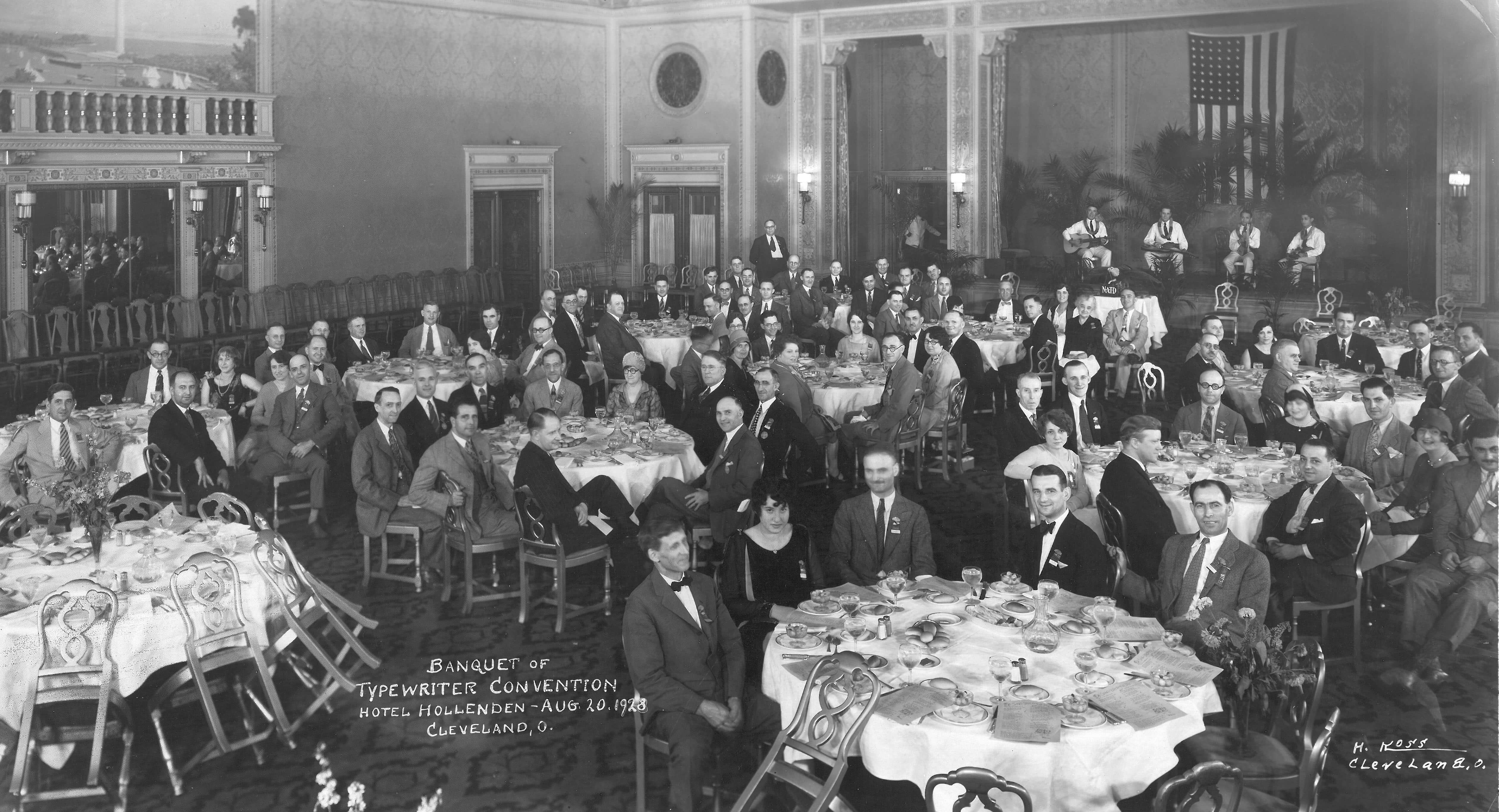
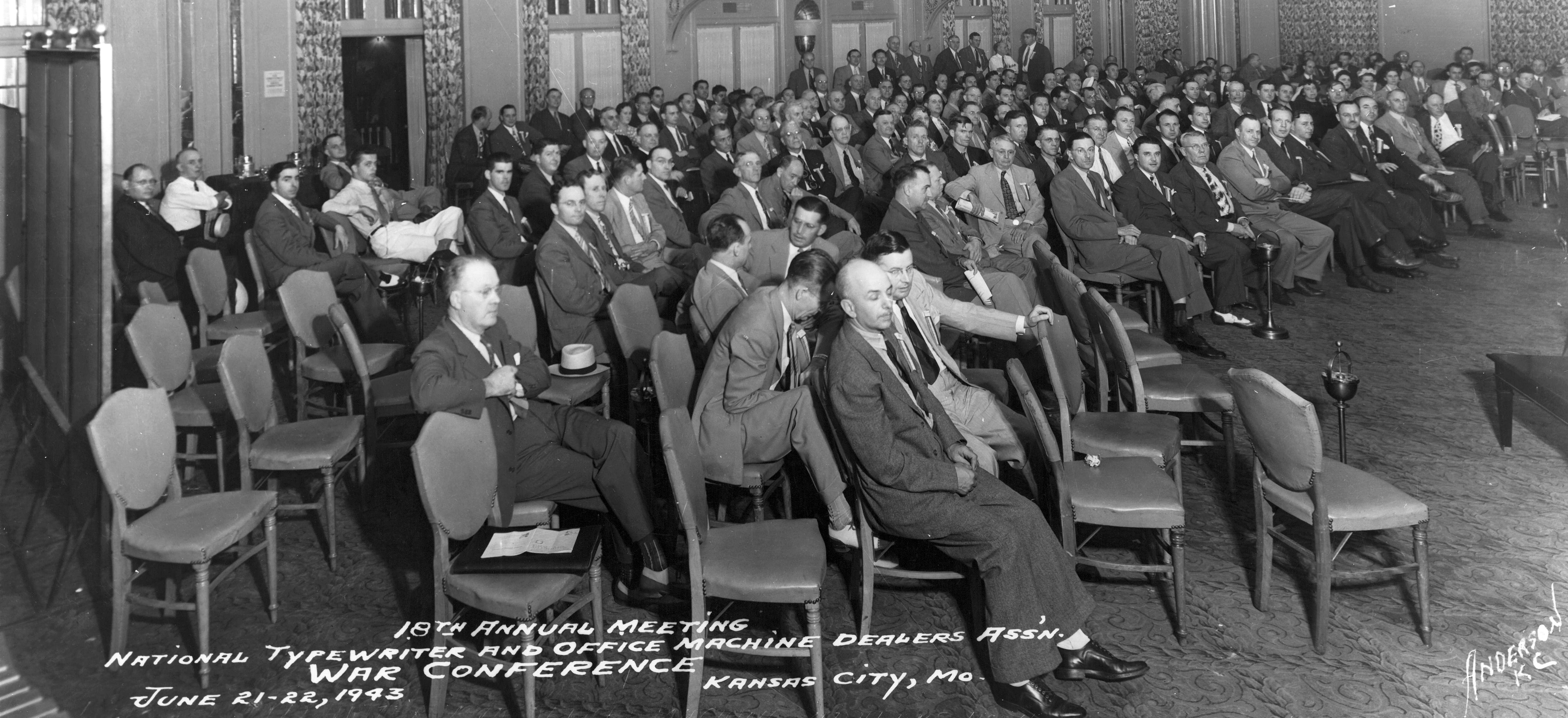
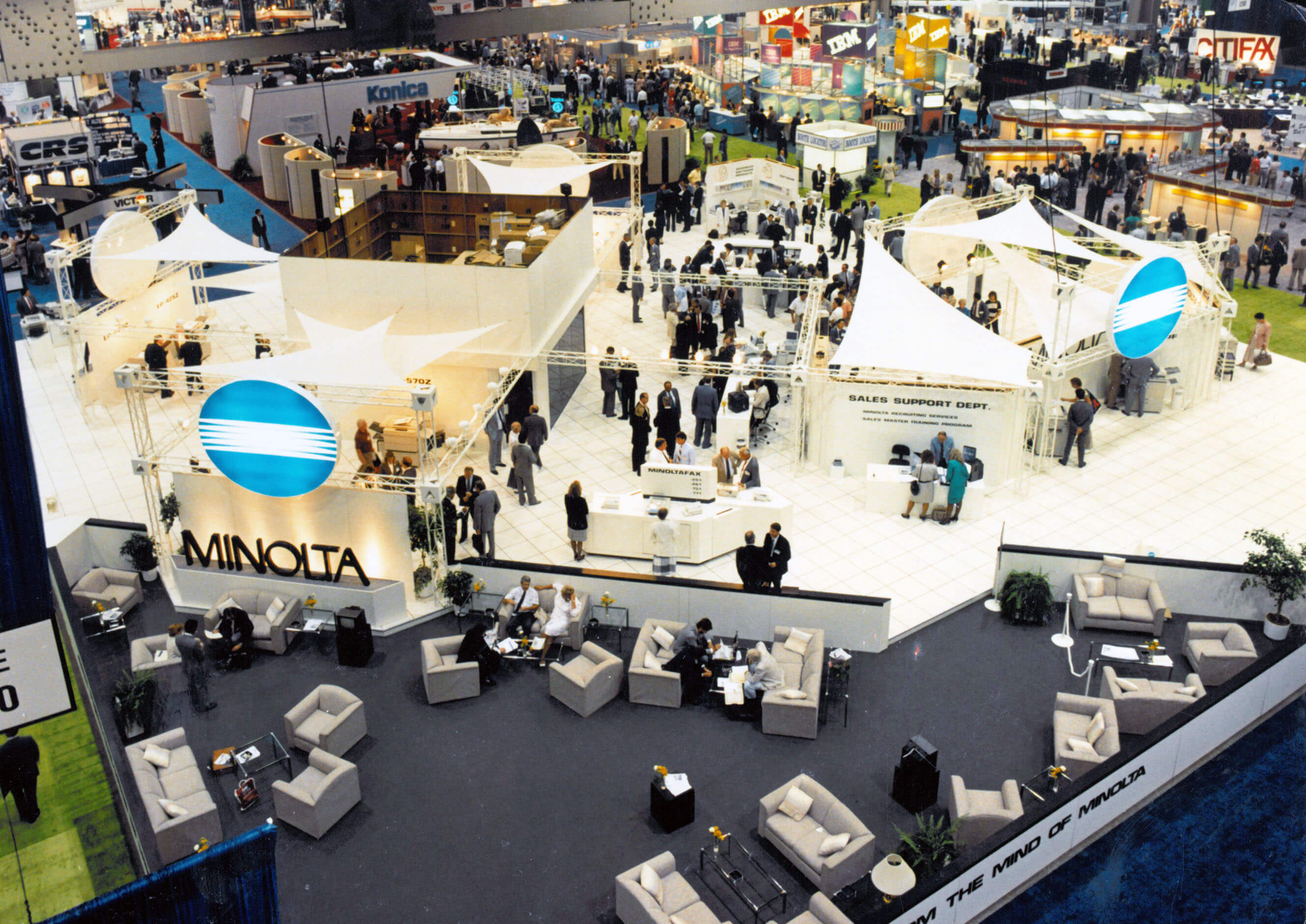
In January 1926, independent typewriter dealers, entrepreneurs each and every one, gathered in Kansas City, Missouri, to form an association that would one day become the Business Technology Association. Behind it all there was a conviction that there had to be unity among the dealers across the country; unity to share ideas, knowledge, success and even failure.
The first officers of the newly formed NATD (National Association of Typewriter Dealers) were elected in 1926. It was agreed that dues for members of NATD would be $10 per year.
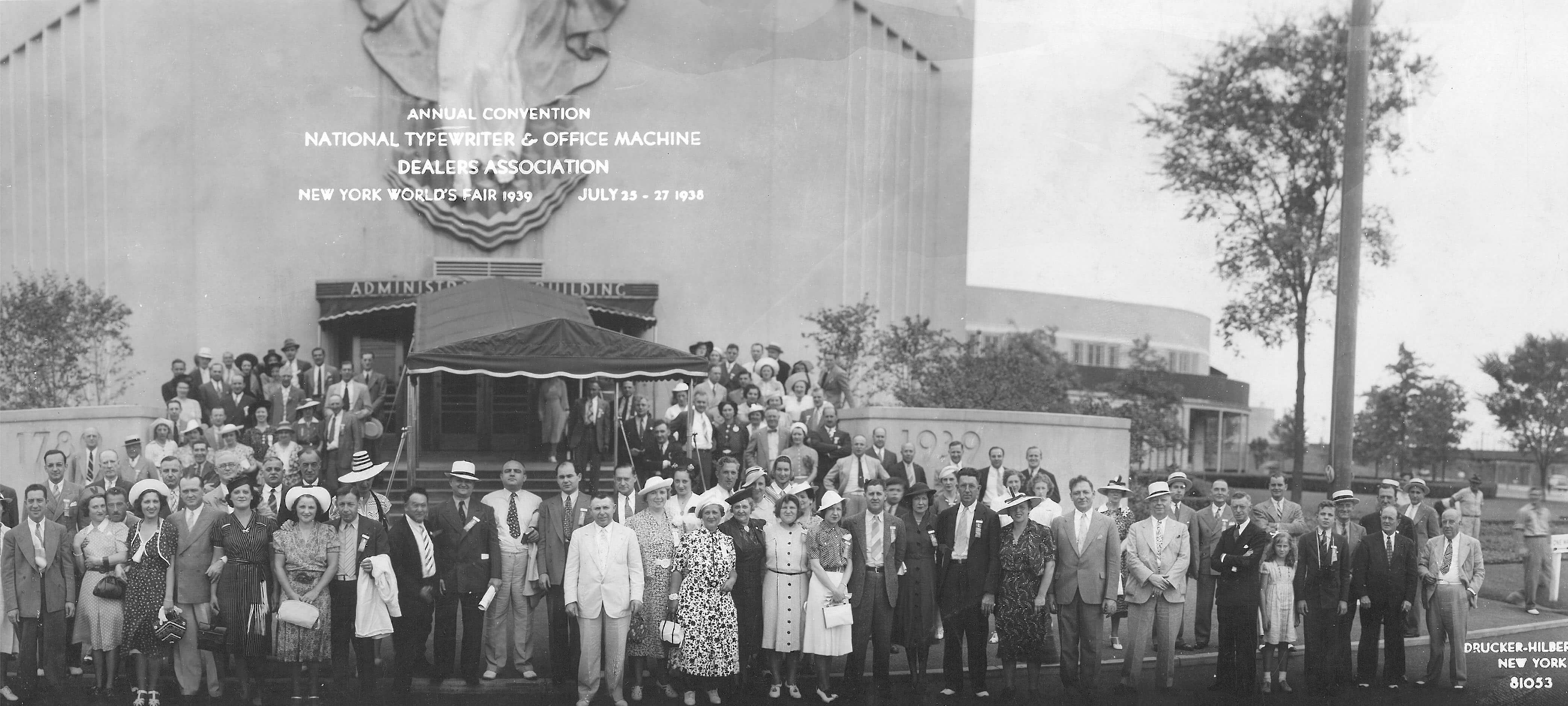
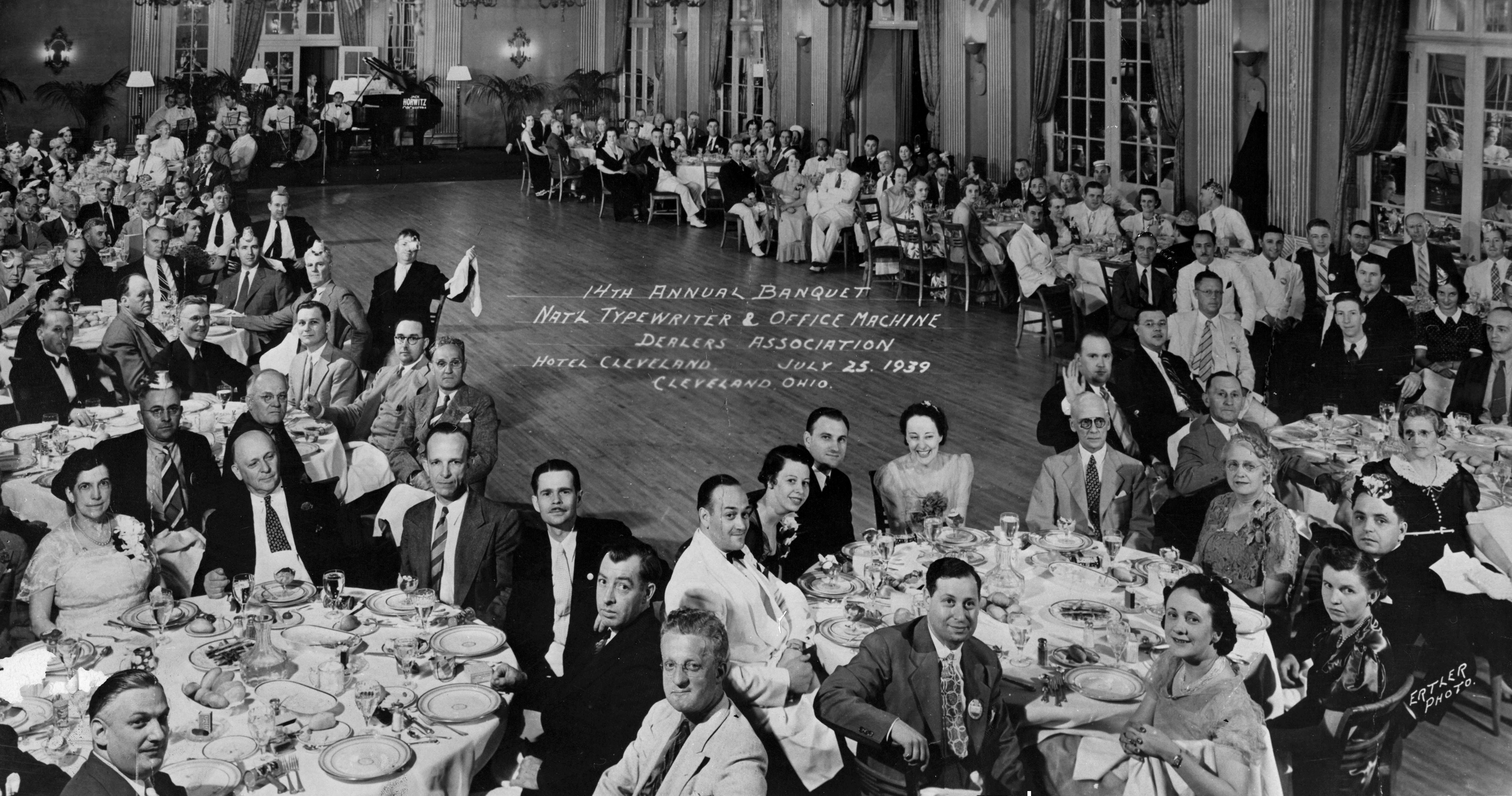
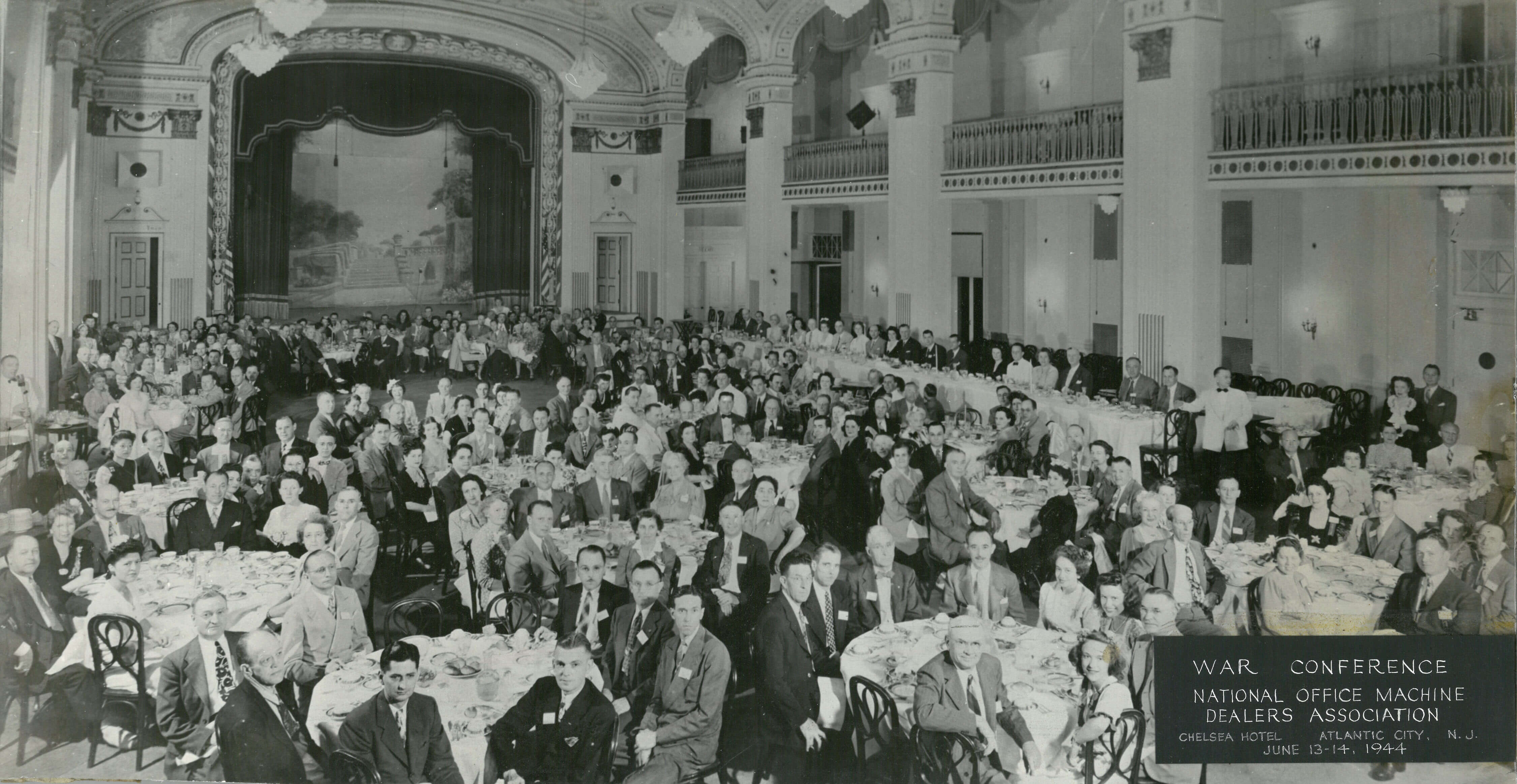
Franklin D. Roosevelt and the New Deal came along in 1933. By this time, the Association had grown so much that it was decided that a name change was in order. NATD became the National Typewriter and Office Machine Dealers Association (NTOMDA).
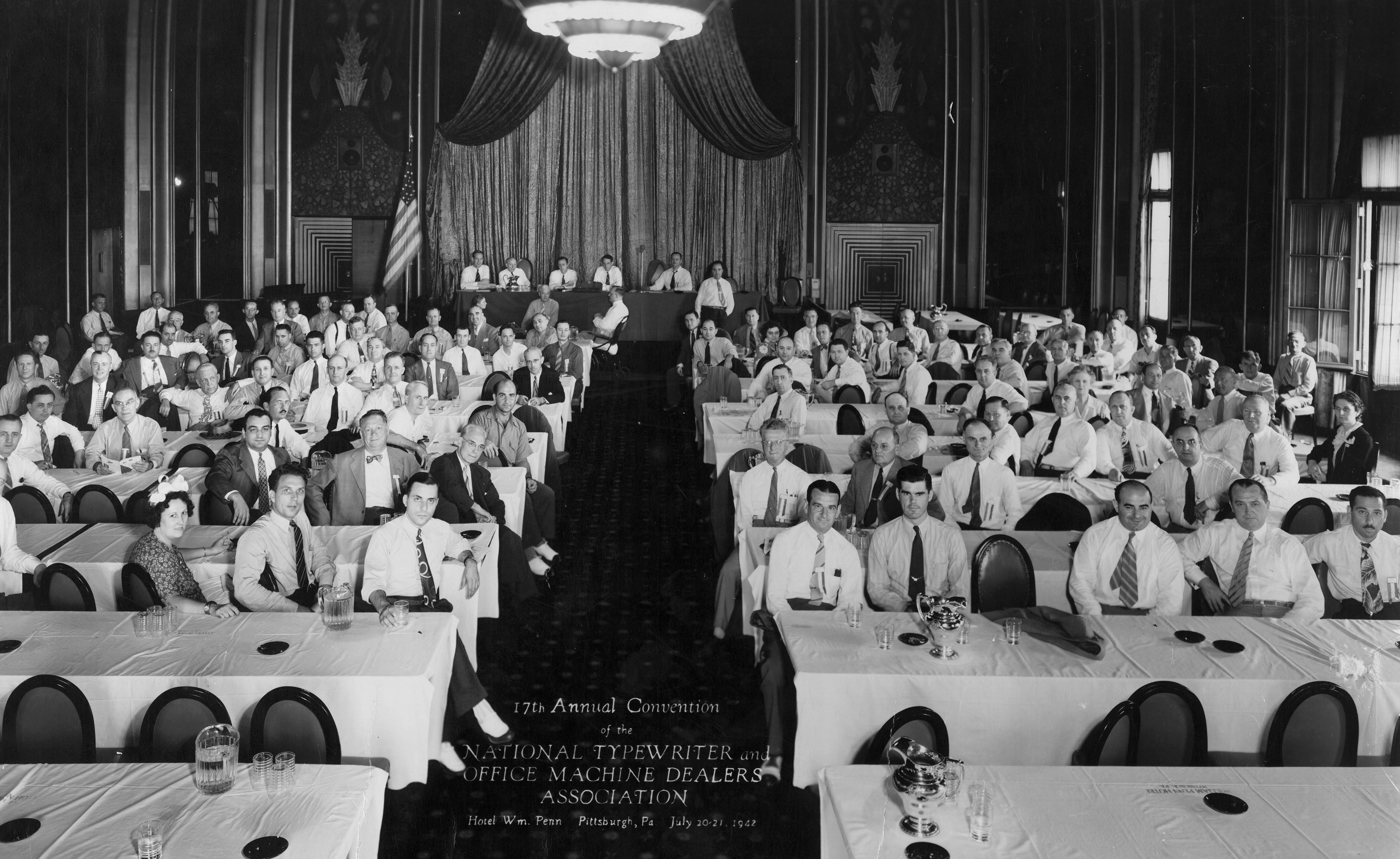
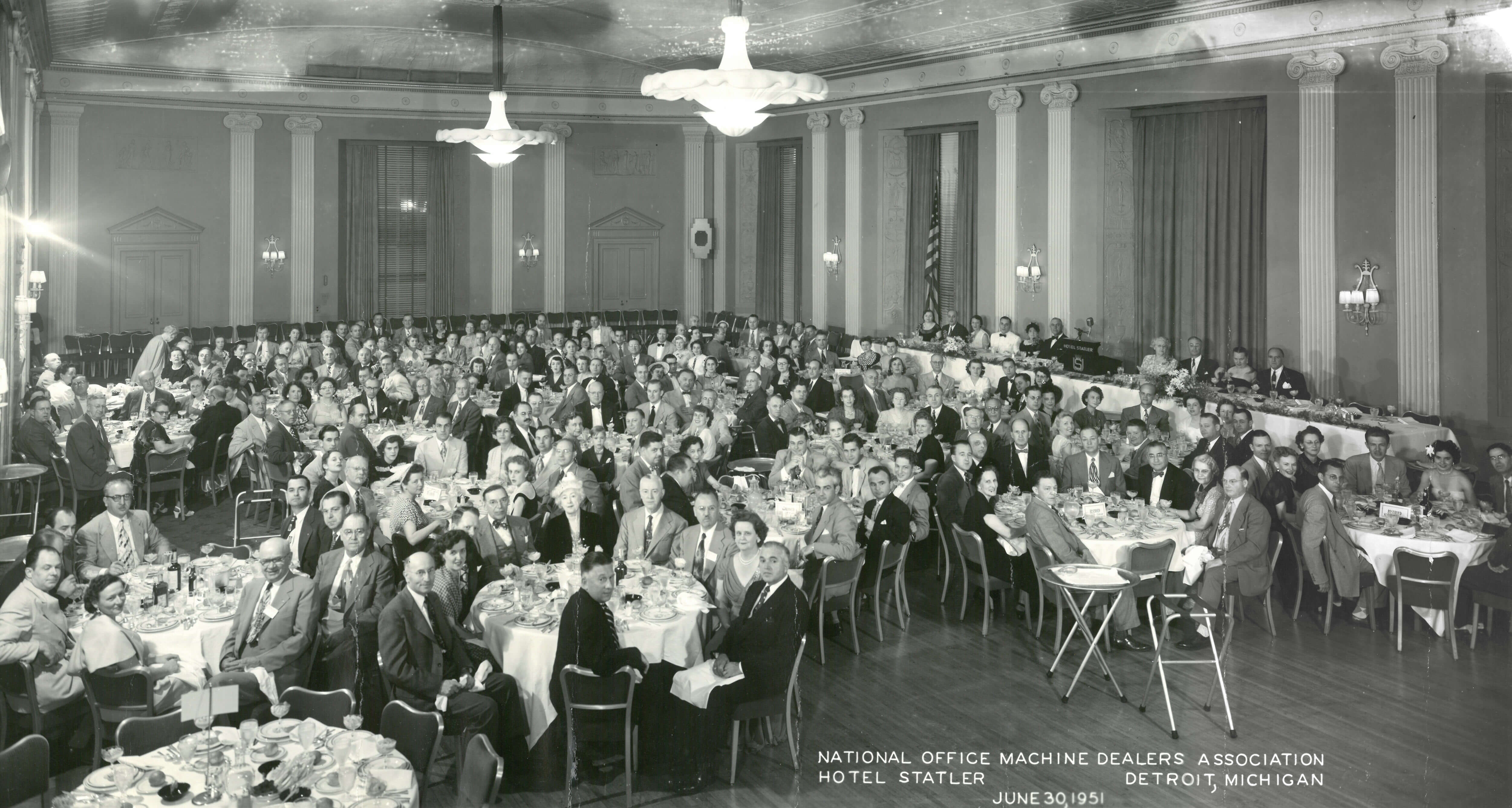
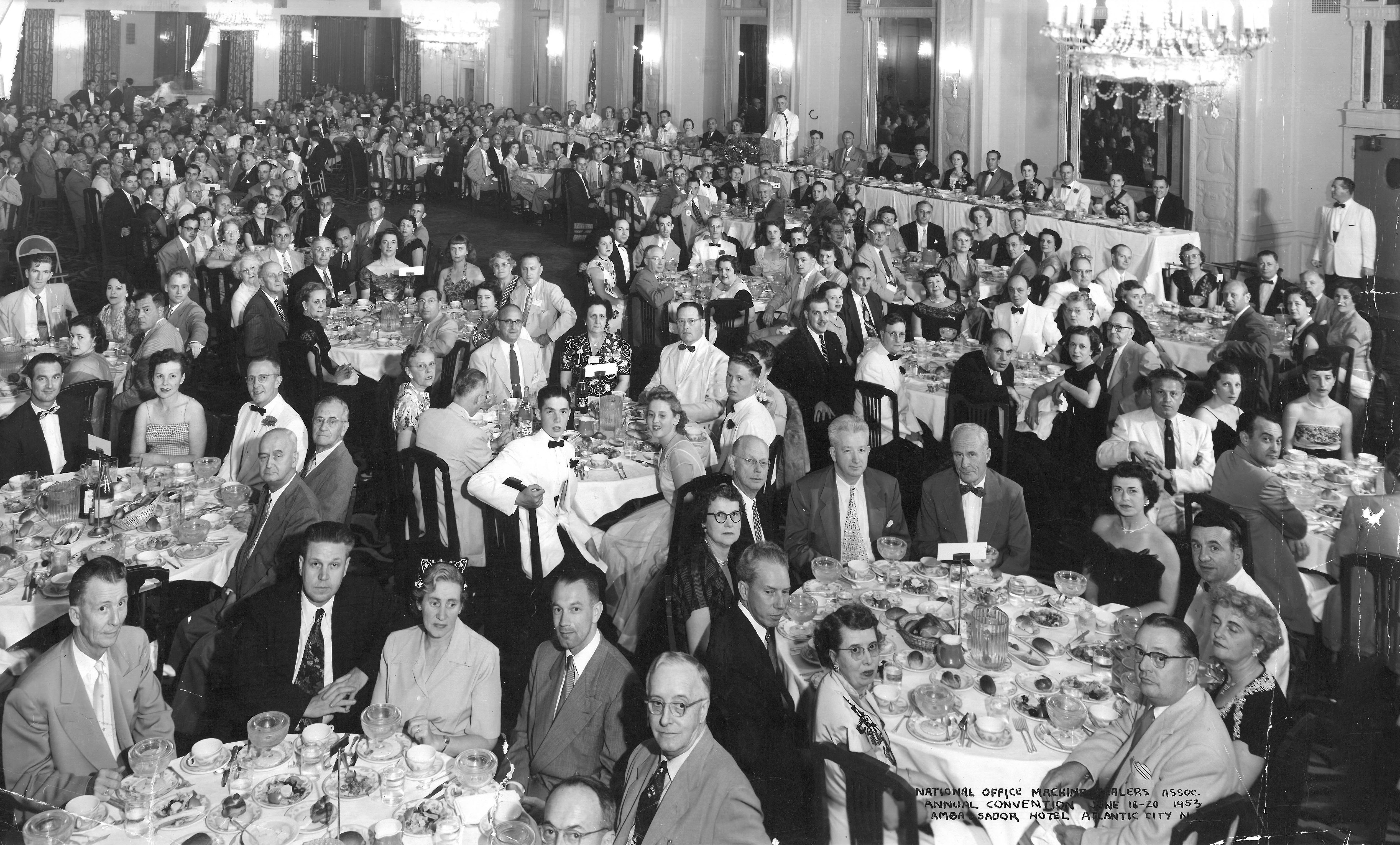
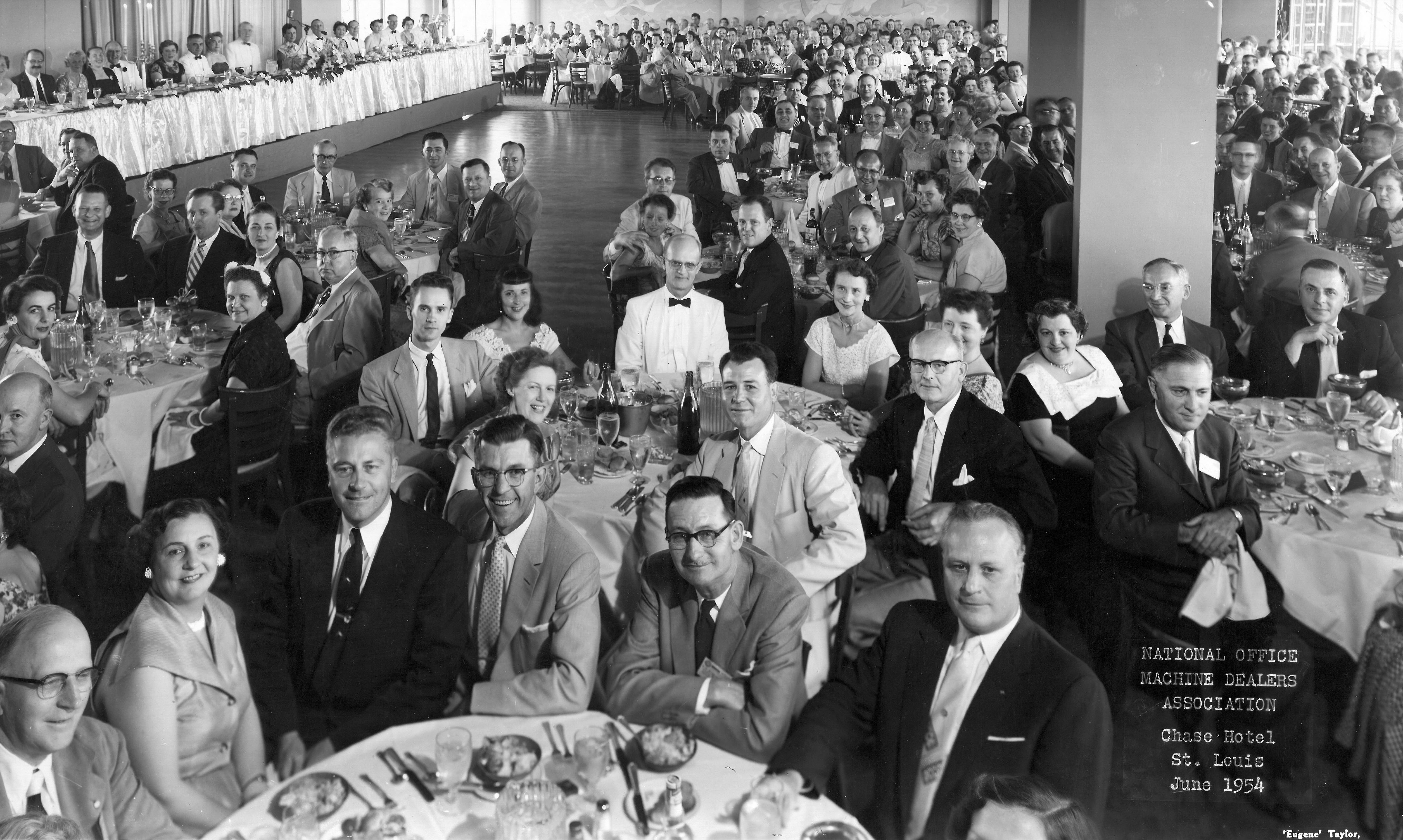
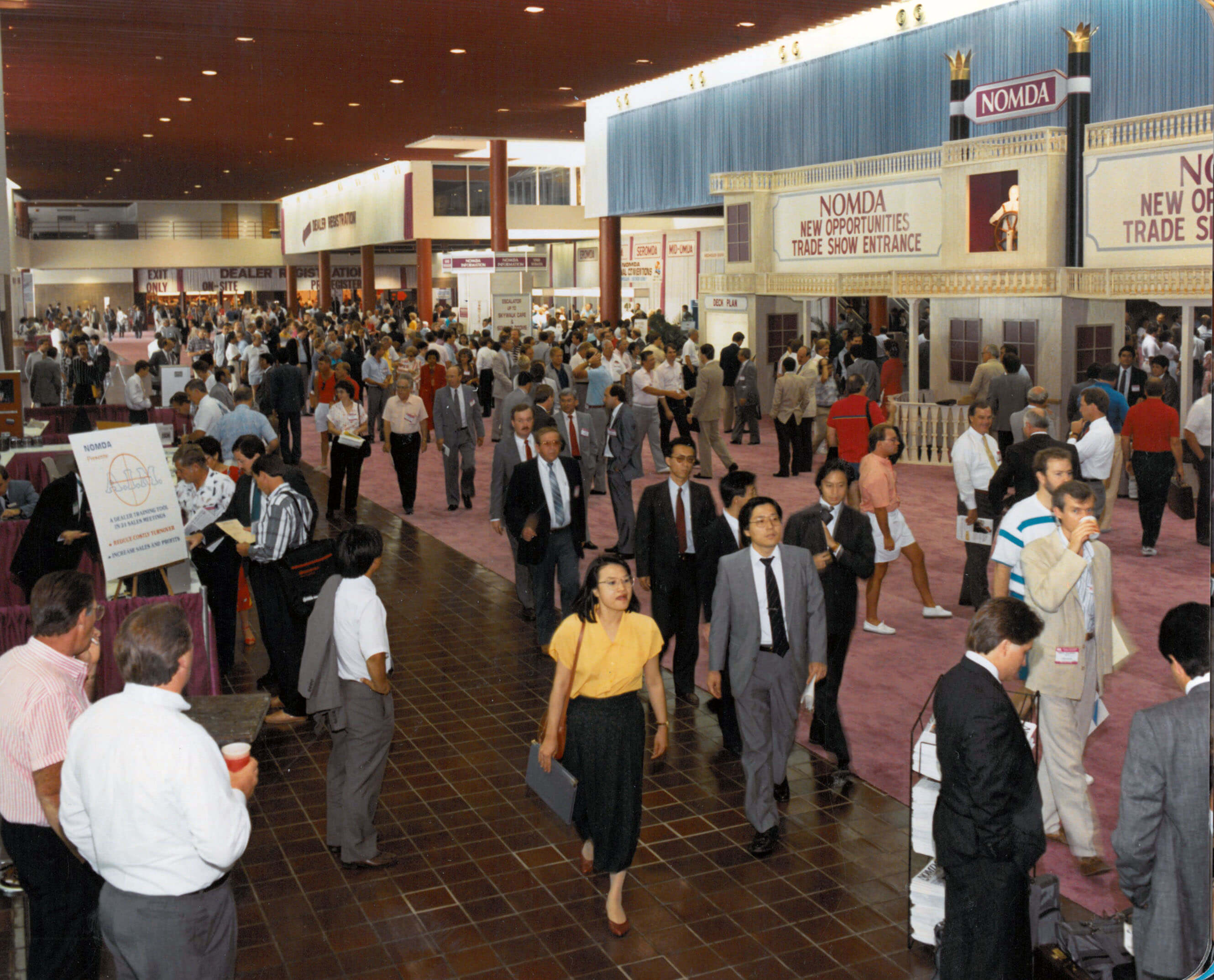
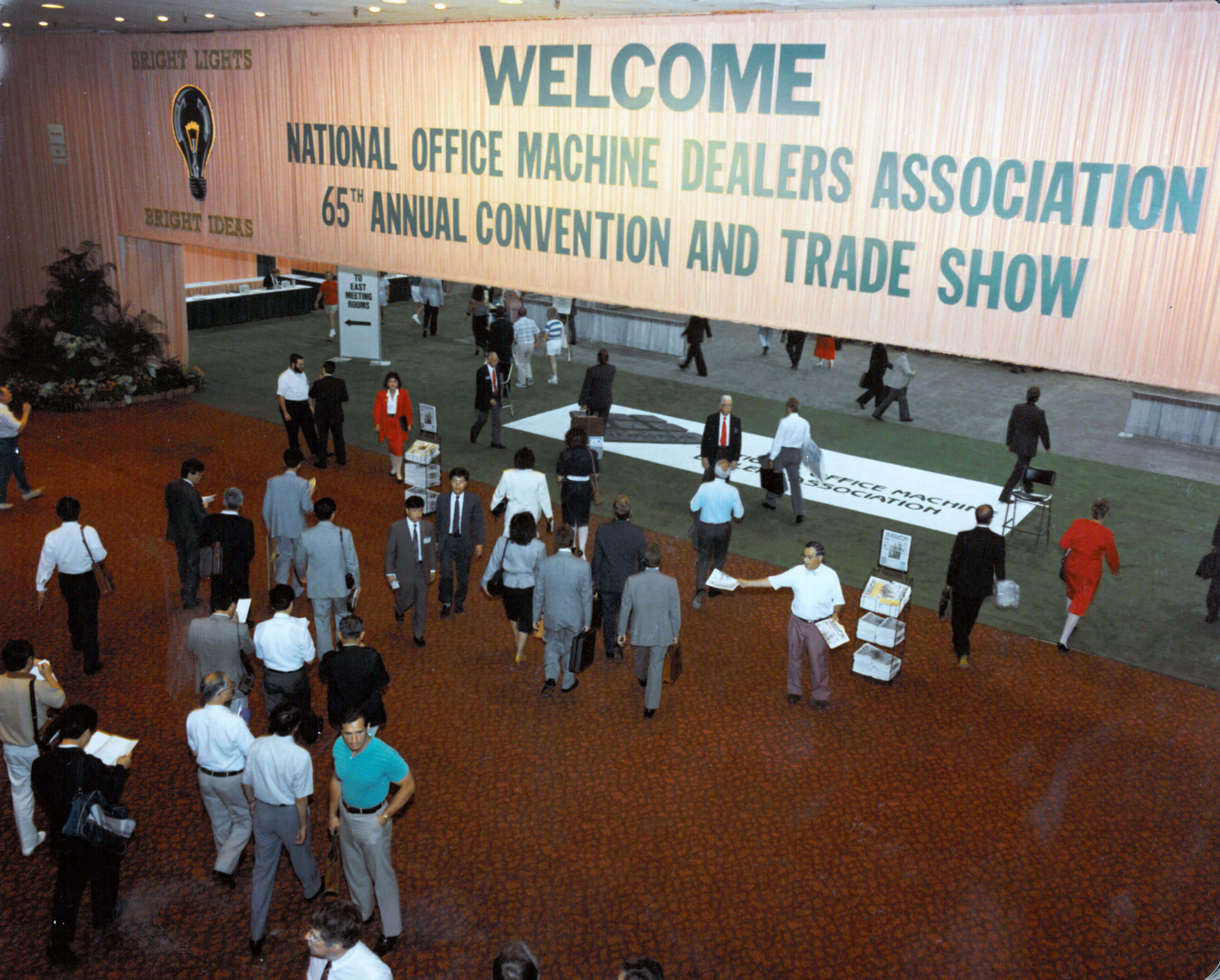
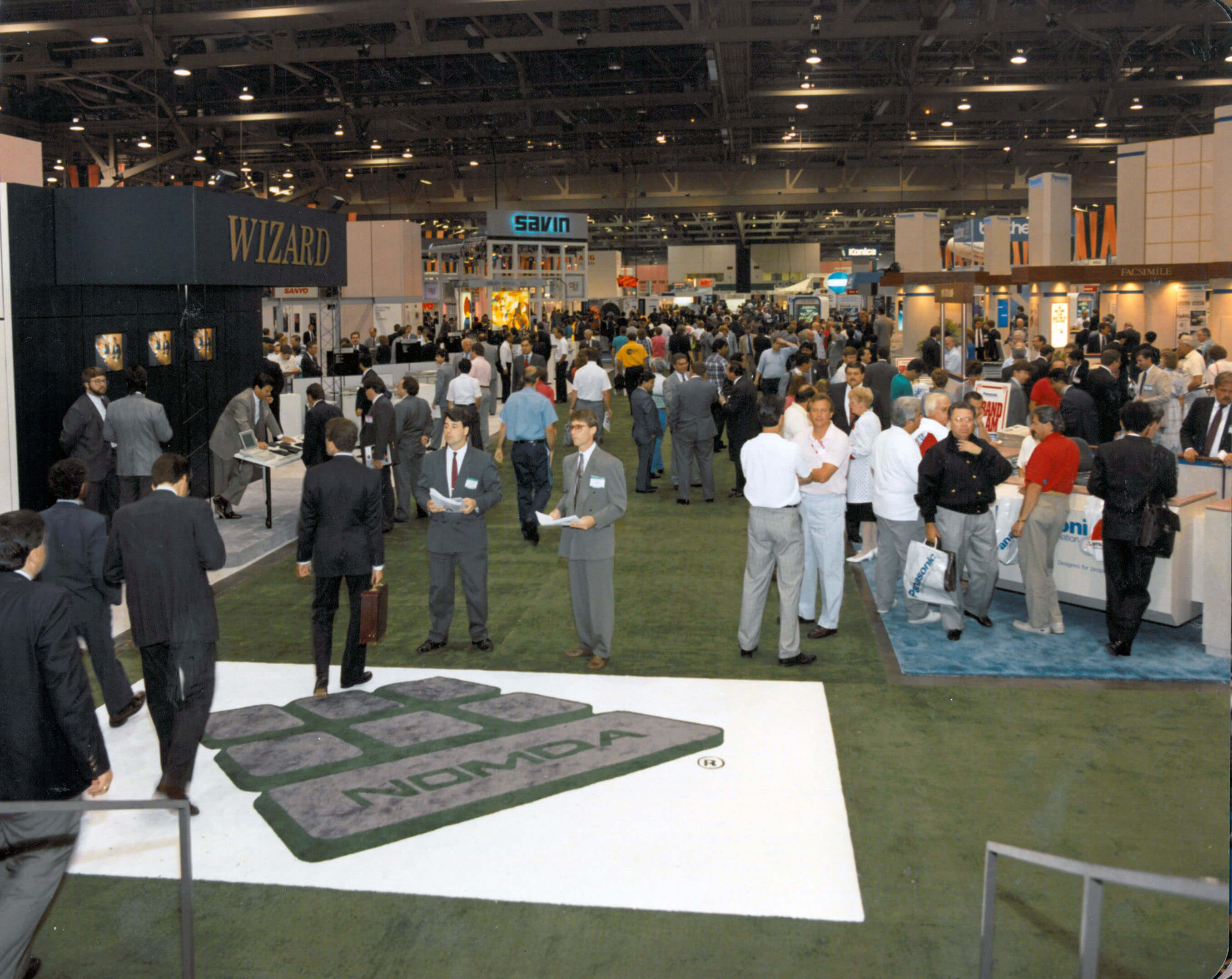
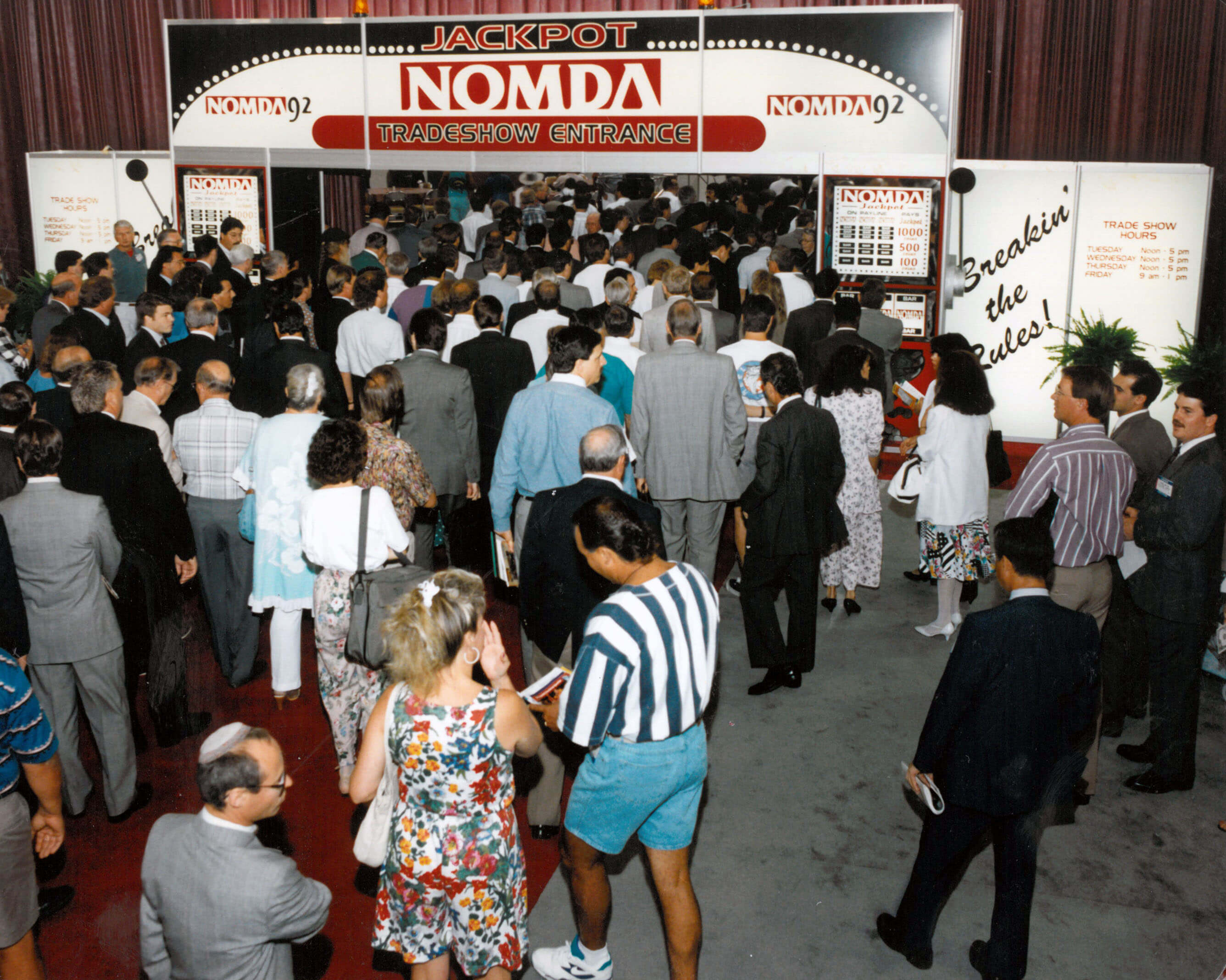
A decade later, shortly after the June 1943 meeting of the NTOMDA, held at the Muehlebach Hotel in Kansas City, Missouri, the name was changed once again to what it would be for the next 50 years: the National Office Machine Dealers Association (NOMDA).
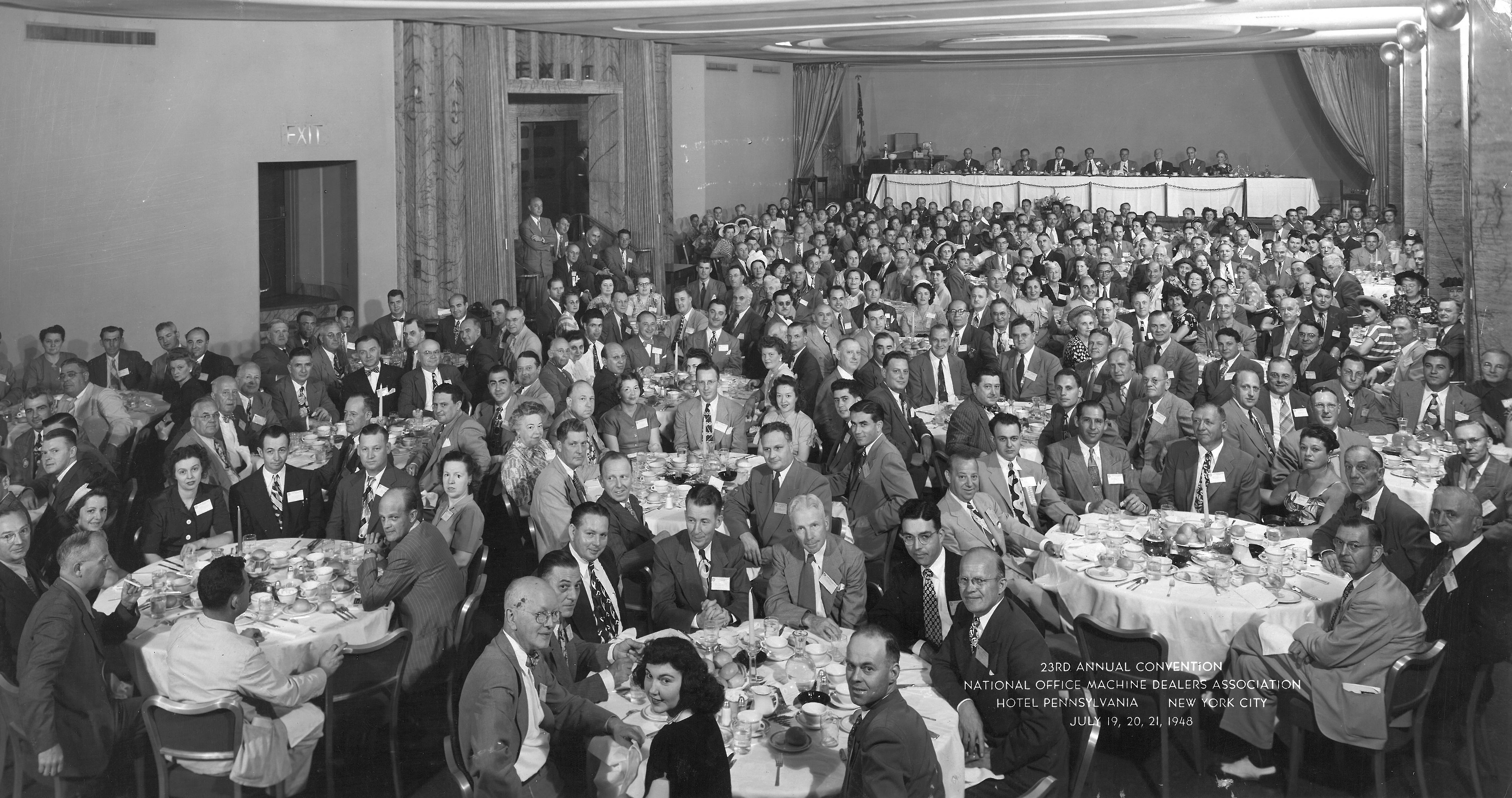
New products introduced in 1948 included such items as these, announced in the September issue of the NOMDA NEWS:
- TAPE RECORDER — a compact, magnetic tape recording and playback machine designed for non-professional use.
- WIRE RECORDER — a new, portable, low-priced model. The combination phonograph/wire recorder reproducer claimed to have 12 essential features of sound reproduction.
- PHOTO COPY DUPLICATOR — designed to produce letter- and legal-sized exact facsimiles of anything written, typed, printed, drawn or photographed in a matter of minutes. Claimed to produce more than 30 finished copies an hour at about five cents per copy. Portable. Had a self-contained darkroom.
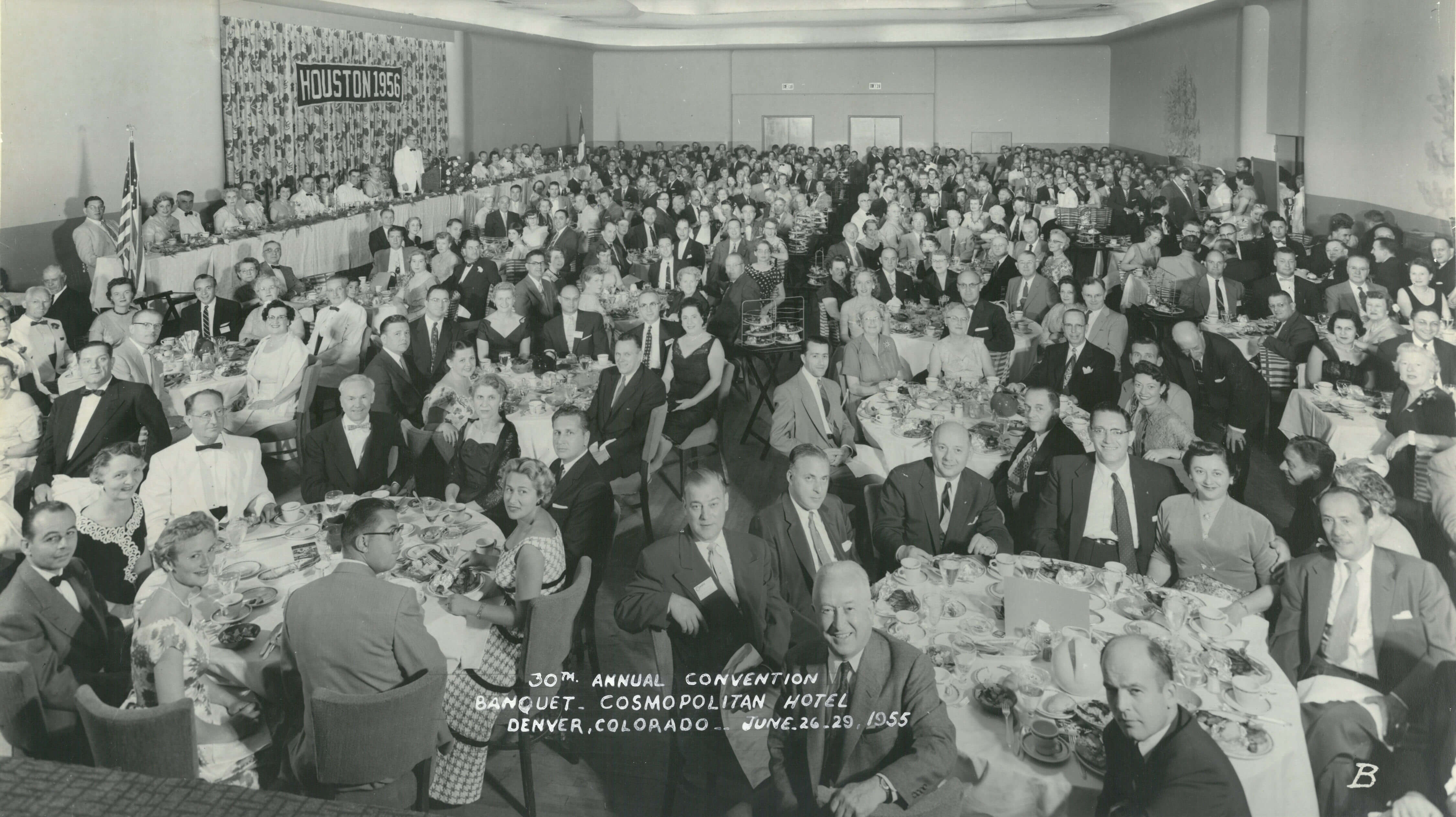
In 1955, the NOMDA Board of Directors was approached by a committee representing the manufacturers of office machines and equipment. It was one of the most far-reaching moves within the industry when the manufacturers held an organizational breakfast and appointed a liaison committee to work with NOMDA. The suggestion of having a Manufacturer's Committee to work with NOMDA on an ongoing basis met with instant approval.
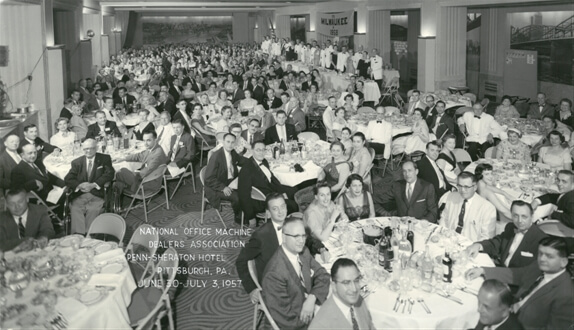
The 1957 convention in Pittsburgh, Pennsylvania, was highlighted by a panel on automation and electronics. It was noted then that "the advent of electronic data processing systems did not come about for the purpose of replacing adding machines or any type of office equipment. On the contrary, there will always be a place for the machine-based on mechanical and electro-mechanical principles."
1960s-1980s
During the 1960s, the office machine industry found innovations in the use of transistors and other miniature devices that allowed office equipment to become more portable, versatile and inexpensive. A dictation machine became super portable and could be carried in the shirt pocket. Calculators also evolved to take up another shirt pocket rather than desktop space.
Convention topics and presentations continued to change through the 1960s to become more technical, more professional and to give greater insight into the problems and concerns of the industry — and to NOMDA's reactions and solutions to them.
Price Waterhouse was commissioned to do a management study of NOMDA. The company issued its August 1965 report that held some important recommendations: The board of directors could function more effectively if it reduced substantially in size. Strong interest was expressed in developing new information programs such as financial and statistical surveys of members' business operations.
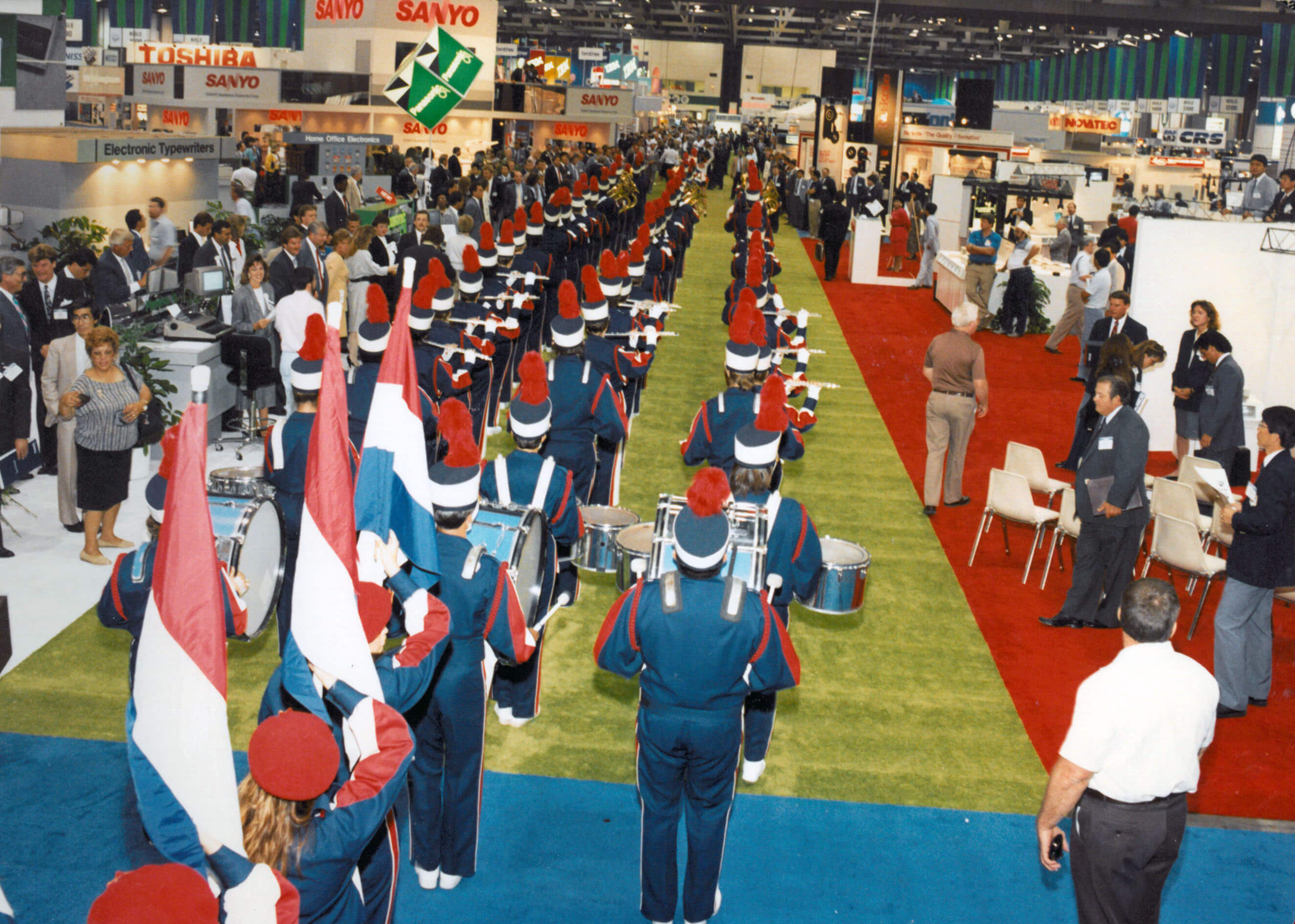
In the 1970s, the office machine dealer could see great things ahead. The Japanese had developed a new and dynamic office appliance called the electronic calculator and they turned to the independent American dealer to sell their products. Within a few years, dealers were selling in excess of 75 percent of the commercial calculator market. Names like Sharp, Canon, Toshiba and Sony became household words.
New products and services entered the office equipment market at a staggering pace during the 1970s. Dealers were so numbed by events that they had difficulty exploring and expanding their markets. A slogan for the decade might have been "Opportunity is always knocking — hurry to the door!" Those who answered the call continued to move ahead.
Ever-increasing competition from direct sales forces of large manufacturers and from the increasing number of manufacturer stores faced the NOMDA dealer in the 1980s. From this arena stepped the 'citizen dealer.' Regarding the 'citizen dealer:' "Their roots are in the community. They are here today and will not be replaced by another temporary salesperson tomorrow. It is NOMDA's obligation to its membership to institute a program to project this image of stability and professionalism."
At the February 1985 board of directors meeting in Florida, NOMDA directors approved the purchase of Loretto Academy in Kansas City, Missouri, to serve as NOMDA's National Education Center. Approval came after the presentation of a 105-page report, the results of a nine-month study conducted by an Ad Hoc Education Development Committee.
1990s-Today
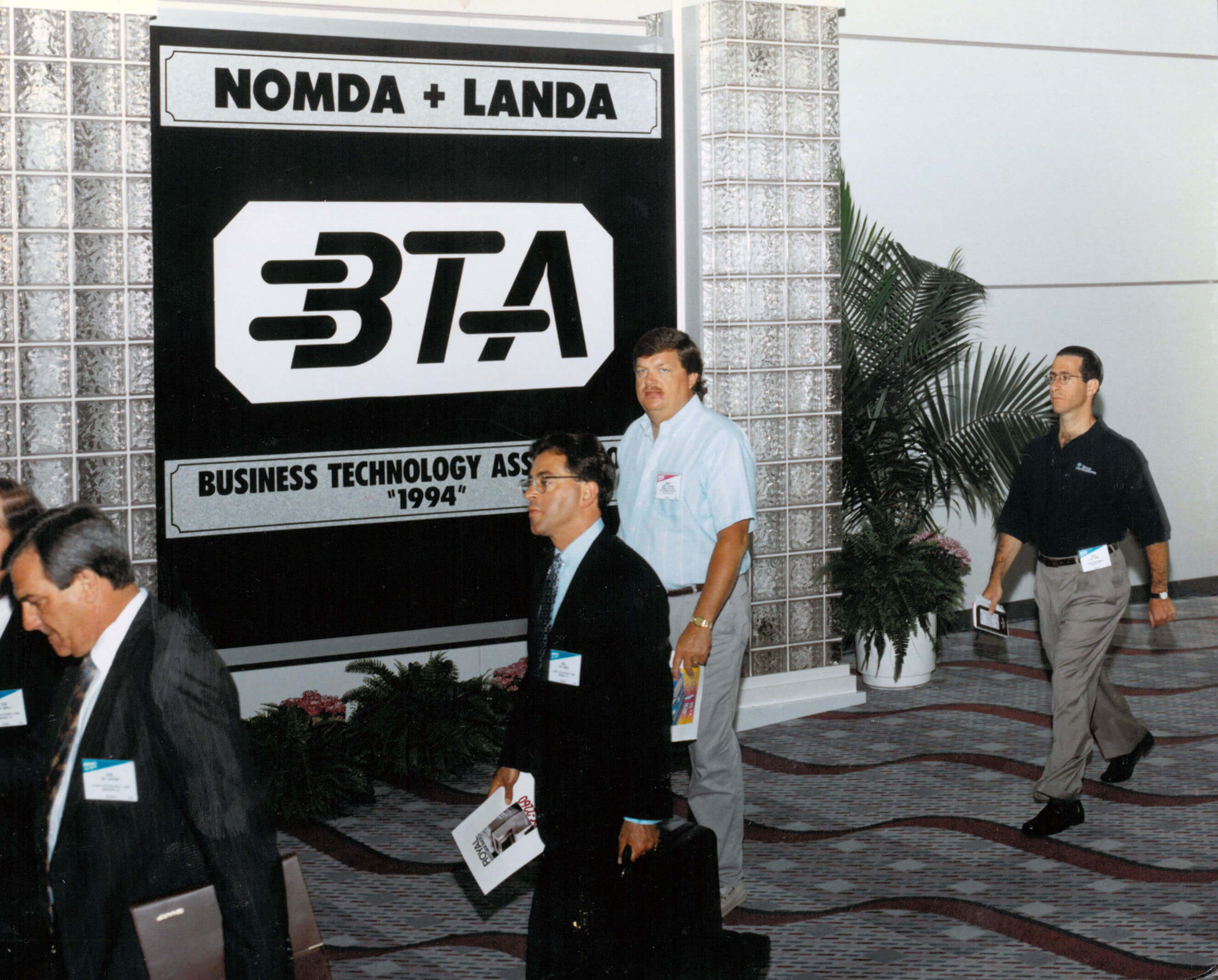
On April 30, 1993, it was announced that officials of NOMDA and LANDA (Local Area Network Dealers Assocation) had signed a letter of intent to merge the two associations. LANDA represented the "high-tech" segment of office systems, complementing NOMDA's membership with strong knowledge of technologies. The merger was approved unanimously by the NOMDA Board of Regents on May 21, 1993. The result was a single organization representing an experienced, knowledge-based channel of dealers and resellers who possessed the highest levels of business savvy and technical expertise in the industry. Initially, the new organization was called NOMDA/LANDA. But eventually, the name changed to more closely reflect the new makeup of the organization.
At a meeting held in Kansas City, Missouri, in the winter of 1993, the board of directors had, as an agenda item, a "name change" presentation. "Business Technology Association" was presented for the first time to the directors at this meeting. The proposed name change was then put before the general membership by ballot in April 1994. In May 1994, the ballots were tallied and the final results showed overwhelming support for the new name.
With the new name came a second merger, this time with AIMED (Association of Independent Mailing Equipment Dealers) in 1994. Begun in 1976, this association, comprised of leading mailing equipment dealers throughout the United States, closely mirrored the mission of BTA: to help members maintain high professional standards and to keep them abreast of the latest developments within the industry. Merger discussions were culminated when, by ballot, AIMED members voiced their decision to merge with BTA in order to better pursue the interests of their members.
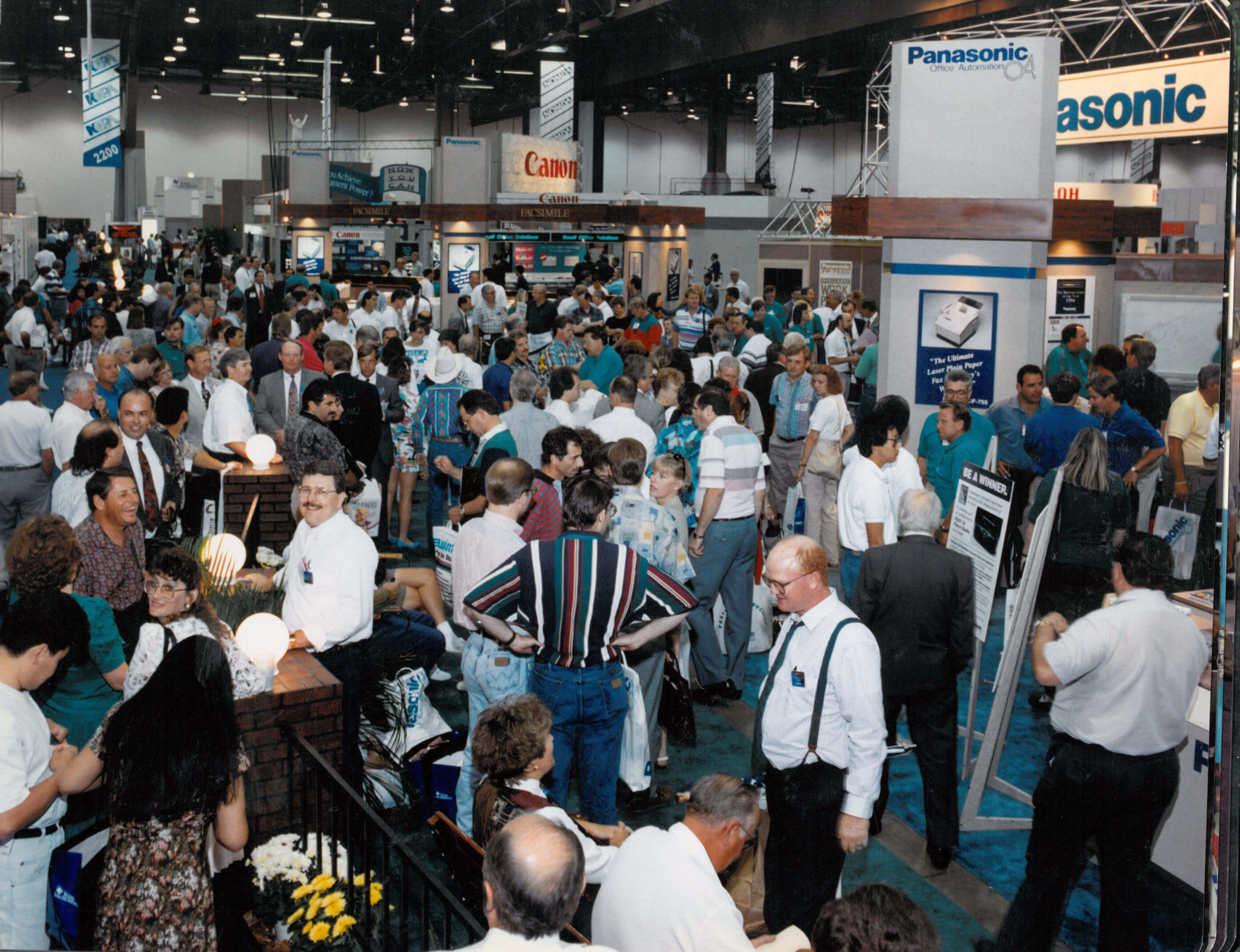
Most recently, the changes in office technologies have blurred the lines of what used to be segregated industry segments. Digital knowledge, network knowledge, the necessity of placing equipment, both standalone and connected, has been a challenge well-met by the synergy within BTA's membership — a clear example of the whole being greater than the sum of its parts.
BTA's history of serving its members since 1926 has shown a remarkable consistency throughout the decades that has been impacted by ever-increasing technology changes. The independents — the dealers comprising the lion's share of BTA's membership — have been trained, with the help of their Association, to continue to compete effectively in the marketplace — and they have adapted while maintaining those original, vital qualities of citizenship and community.
Today, the Business Technology Association is still headquartered in Kansas City, operating from the facility it purchased in the mid-1980s. Although the building no longer serves as BTA's Education and Conference Center, the facility still hosts board of directors meetings and BTA's national headquarters staff.
Check out a video tour of the Thomas A. Russo Museum of Business History and Technology.
Member Testimonials
"Membership easily pays for itself with just the education and legal benefits."
— Mark Naylor, ABM Automation, Oklahoma City, Oklahoma
"BTA is an organization dedicated to the development of independent dealers."
— Ray Belanger, Bay Copy, Rockland, Massachusetts
"I have always told other dealers that the benefits outweigh the membership cost. The legal advice alone is worth the membership cost."
— John Kerling, United Business Systems, Buffalo, New York
"I have described BTA to another dealer who currently is not a member. I let him know that he would rub elbows with some pretty decent people and that he would likely meet folks who could and would help if given the chance."
— John Eckstrom, Carolina Business Equipment Inc., Columbia, South Carolina
"It's the best resource and value; you're crazy if you don't belong. One report, piece of legal advice or contract template will cost you a lot more than membership!"
— Greg Gondek, ACT Group, Cromwell, Connecticut
"BTA is the 'Total Association.' It provides industry news, contacts, training and best practices for business technology resellers and service providers."
— Robert Moore, Lockwood Moore, Reno, Nevada
"If you are going to be a successful office technology dealer, BTA is the ‘go-to’ association. It offers information services on every aspect of the business. This information is offered in print, webinars, classroom workshops and district events, which are all included or offered at a discount with dealer membership. BTA keeps you abreast of all new technologies with online support. And its growing list of member benefits can save a dealer a lot of dollars. I have been a BTA member since I opened my dealership. BTA truly has the dealers' best interests at heart!"
— Bob Smith, Copiers Plus Inc., Fayetteville, North Carolina
"We use the BEQI and Bob Goldberg. I think the other benefits, like insurance, are certainly of value to your smaller members."
— Dean Boring, Boring Business Systems, Lakeland, Florida



BTA Membership
BTA's Legacy
BTA at 100
BTA Legal Services
BTA Education
BTA Scholarship Program
BTA Events
Dealers Helping Dealers Discussion Groups
PRO Dealer Group
State of the Industry

Recaps of BTA IGNITE Kansas City 2026 & BTA at 100: A Celebration:
Videos played during BTA at 100: A Celebration:
Some of the recognitions during BTA at 100: A Celebration:
Industry executives congratulate BTA on its 100th anniversary:

BTA's 90th anniversary event, BTA at 90: A Celebration, was held
June 10, 2016, at Kansas City Union Station in Kansas City, Missouri.
Watch some videos from the event below:
Event
highlights:
Awards
ceremony:
This BTA history video kicked off the event:
Industry executives sing with Gregory Hyde:
Click here for photos of BTA at 90: A Celebration.
Click here for Office Technology's June 2016 cover story
on the history of the association.
Industry executives congratulate BTA on its 90th anniversary:
Click a linked name to watch a video of that year's Past President's Award presentation.
| 1926: George S. Walker 1926-27: W. R. Schilling 1927-28: Dean Reynolds 1928-29: H. F. Sanderson 1929-31: James P. Wards 1931-32: Lamont Wood 1932-33: Ted Schafer 1933-34: William Clausing 1934-36: C. Elmer Anderson 1936-39: Lamont Wood 1939-41: John Loser 1941-43: Irwin Vincent 1943-44: Nick H. Fucci 1944-45: J. L. Macon 1945-46: Gene E. Taylor 1946-47: Robert R. Randazzo 1947-48: I. R. Ritchie 1948-49: Earl T. DeGroot 1949-50: Gordon E. Miller 1950-51: E. J. Toussaint 1951-52: Liston Jackson 1952-53: Jack Weiner 1953-54: John Romano 1954-55: Wilbur E. Walker 1955-56: David C. Silvers 1956-57: D. L. Keeney Jr. 1957-58: H E. Steinke 1958-59: Charles S. Meyers 1959-60: Alfred H. Foxcroft 1960-61: Paul McWilliams 1961-62: Edgar Noll 1962-63: Edwin T. Feigl 1963-64: V. L. Kennedy 1964-66: Gale L. Mead 1966-67: Harold Peck 1967-69: Robert M. Woletz 1969-71: James H. Ayres 1971-72: Michael L. McWilliams 1972-74: James P. Charles 1974-75: A. Gordon Adams 1975-76: Robert G. Kuykendall 1976-77: Bruce E. Losty 1977-78: John A. Morse 1978-79: Alfred "Burt" Aus 1979-80: Donald J. Wright | 1980-81: Tom Van Gelder 1981-82: Joe Stuart 1982-83: J. Randel Dockery 1983-84: John Kuchta 1984-85: Richard A. McClure 1985-86: Thomas A. Russo Sr. 1986-87: Robert E. Todd Sr. 1987-88: William C. Matthews Sr. 1988-89: Paul Williams 1989-90: David Shearer 1990-91: Perry Wells 1991-92: John Mackery 1992-93: Norman Lankford 1993-94: Leon Carter 1994-95: Monroe Levrets 1995-96: Herschel H. "Zip" White 1996-97: John Malone 1997-98: Carol A. Wylie 1998-99: William D. Cooper 1999-00: Nancy Taylor 2000-01: Bruce Bro 2001-02: Robert Whiton 2002-03: Dennis Hunter 2003-04: N. Joyce Chapman 2004-05: Jeff Jehn 2005-06: Mark Naylor 2006-07: Dan Hayes 2007-08: Shannon Oliver 2008-09: Ronelle Ingram 2009-10: Bill James 2010-11: Rock Janecek 2011-12: Tom Ouellette 2012-13: Terry Chapman 2013-14: Todd J. Fitzsimons 2014-15: Ron Hulett 2015-16: Dave Quint 2016-17: Rob Richardson 2017-18: Dan Castaneda 2018-19: John Eckstrom 2019-20: Bob Evans 2020-22: Tim Renegar 2022-23: David Polimeni 2023-24: Don Risser 2024-25: Adam Gregory 2025-26: Debra Dennis |
Click a linked name to watch a video of that year's Volunteer of the Year Award presentation.
| 1962: George Chadwick 1963: Edgar Noll 1964: Paul McWilliams 1965: Robert M. Woletz 1966: James H. Ayres 1967: Robert M. Woletz 1968: Harold Peck 1969: James H. Ayres 1970: Michael L. McWilliams 1973: James P. Charles 1974: Kenneth Shrier 1975: Robert Eisele 1976: A. Gordon Adams 1978: Henry Walter 1979: John Morse 1980: Marty Shenk 1981: Kenneth Shrier 1982: A. Gordon Adams 1983: William Matthews Sr. 1984: James H. Ayres 1985: Jim Woods 1986: Lee Pennell 1987: John Lekka 1988: Thomas A. Russo Sr. 1989: David Dukes 1990: Jim Adams 1991: Thomas DeGroot 1992: Robert E. Todd Sr. 1993: Tom Browder 1994: Mark Naylor 1995: Howard Lubert | 1996: Herschel H. "Zip" White (posthumously) 1997: Kent Boom 1998: John Kuchta 1998: Bruce Losty 1999: Ronelle Ingram 2000: Bruce Bro 2001: Robert Whiton 2002: Dennis Hunter 2003: Alan Disher 2004: Richard Van Dyke 2006: Louis Slawetsky 2008: Terry Chapman 2009: Bill James 2010: Tom Ouellette 2011: Todd J. Fitzsimons 2012: Ron Hulett 2013: Rob Richardson 2014: Dave Quint 2015: Mike Ehlers 2016: John Eckstrom 2017: Dan Castaneda 2018: David Polimeni 2019: Greg Quirk 2020: Mike Hicks 2021: Bob Evans 2022: Debra Dennis 2023: Tim Renegar 2024: Debra Dennis 2025: Kevin Marshall 2026: Chip Denlinger |
Click a linked name to watch a video of that year's BTA Hall of Fame award presentation.
2016: Thomas A. Russo Sr.
2024: Robert C. Goldberg
Click a linked name to watch a video of that year's BTA Legacy Award presentation.
2015: Robert C. Goldberg
2016: Brent Hoskins
 The Channel Champion Award is given to the manufacturer that brings in and introduces to BTA the most new members during a given year.
The vendor member that brings the greatest number of new BTA dealer members (with a minimum of five) will receive the BTA Channel Champion Award. In addition, the winner will receive two complimentary full-page ads in BTA's Office Technology magazine, recognition in the magazine and on BTA's social media.
Any dealership that has not been a member for at least three months and enters your company's promo code in the online membership application will count toward the total number of new members you are bringing to the association. Plus, dealers who enter the code will be entered into a drawing for a $500 American Express gift card!